Did you know that 44% of teachers quit within the first five years?
That’s more than half a million educators leaving the field each year! With more than 20,000 Montessori schools in the world that need exceptional teachers, we are in a crisis moment. It’s more important than ever that we not only attract and prepare people for this critical work, but that we continue to support and retain quality Montessorians.
Teacher self-efficacy and social supports are two factors associated with teacher burnout (Ghanizadeh & Jahedizadeh, 2015; Kerry-Henkel, 2017). Specifically, a teacher’s sense of self-efficacy in managing their classroom is significantly related to burnout (Aloe et al., 2014). Mentoring programs for new-to-title teachers has a positive impact on teachers and their retention (Ingersoll & Kralik, 2004). These programs can aim to support key underlying aspects of teacher success namely knowledge, resilience, and self-efficacy (Ortan, Simut & Simut, 2021). When teachers experience success in the classroom (also known as mastery experiences), it improves their sense of self-efficacy (Pfitzner-Eden, 2016). Mentoring is also used to help teachers overcome isolation, realize the benefits of reaching out to peers/more experienced teachers, create a community of learning/support, improve teaching skills, and counteract burnout/prolong longevity in the field (Shanks et al., 2022). Creating a mentoring community is in line with research findings that a teacher’s professional environment influences teacher wellbeing and longevity (Ainsworth & Oldfield, 2019).
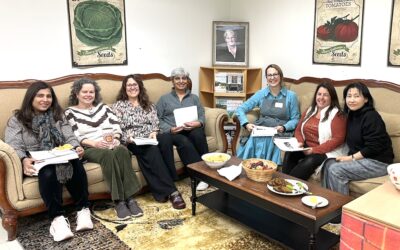
As part of our response to this need, the Greenspring Center for Lifelong Learning has created year-long, virtual mentoring communities for new educators and school leaders that provide high-quality education and practical help in real-time. Montessori Guides in their first years of teaching and new school leaders are invited to join with others at their level for weekly online meetings.
Each cohort will be led by highly experienced Montessorians who will share expertise and practical advice, facilitate discussion, and support self-reflection and goal setting. Our model is research-based and all of our cohorts will be participating in a research study to collect and share data about the efficacy of the approach. Our goal is that this experience is a powerful support that helps new guides and school leaders gain confidence, agency, and practical skills that ultimately leads to greater longevity in the field.
Although these communities are geared towards new educators and school leaders, we welcome any Montessori practitioner looking for a space to rejuvenate, reflect, and reconnect to our higher purpose.
As Dr. Montessori wrote, “An education capable of saving humanity is no small undertaking.” We agree and we’re here to help!